What is the macula?
The macula is the central part of the retina responsible for sharp vision. The macula is a small area located in the center of the retina at the back of the eye, responsible for sharp and detailed vision. Thanks to the macula, we can read, recognize faces, see fine details, and perceive colors clearly.
The macula is also known as the “yellow spot.” It controls central vision, which we use the most in daily life. For this reason, problems affecting the macula can significantly impact a person’s quality of life.
What Does the Macula (Yellow Spot) Do?
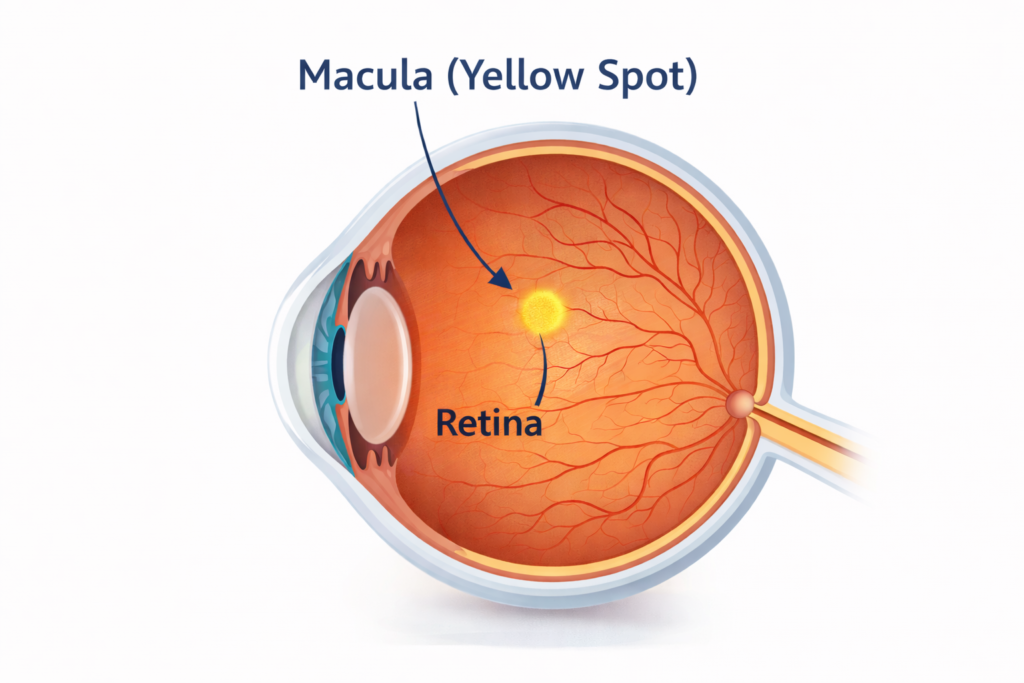
The macula (yellow spot) is located in the center of the retina and is responsible for sharp central vision.
The macula is one of the most sensitive parts of the eye and plays a key role in the following visual functions:
- Reading and seeing text clearly
- Detecting fine details
- Recognizing faces
- Distinguishing colors
- Maintaining sharp central vision
When the macula is healthy, vision remains clear and sharp. However, damage to the macula may lead to vision loss.
Why Is the Macula Called the “Yellow Spot”?
The macula is often referred to as the yellow spot because it contains special pigments called lutein and zeaxanthin. These pigments act as natural filters that help protect the retina from blue light and oxidative damage.
These protective pigments are important for maintaining long-term eye health. A diet rich in leafy greens, colorful vegetables, and omega-3 fatty acids may help support macular function and reduce the risk of macular degeneration.
What Is AMD (Age-Related Macular Degeneration)?
One of the most common conditions associated with the macula is AMD (Age-Related Macular Degeneration).
AMD typically affects people over the age of 50 and causes gradual damage to the macula over time. As the disease progresses, it may lead to blurred central vision, distortion, and even vision loss.
To learn more about one of the most common types of AMD, read our detailed guide: What Is Dry AMD? Symptoms, Causes, and Treatment Options (2026).
What Are the Symptoms of AMD?
Symptoms of AMD usually develop slowly. The most common symptoms include:
- Seeing straight lines as wavy or distorted
- Blurred vision when reading
- Letters appearing shifted or missing
- A dark or empty spot in the center of vision
- Colors appearing faded
- Difficulty reading or focusing
- Difficulty recognizing faces
If you notice any of these symptoms, it is important to consult an eye doctor as soon as possible.
How to Check the Macula with the Amsler Grid Test
One of the easiest and most effective ways to detect macular problems early is the Amsler Grid test.
This test allows you to check your central vision at home. If you notice distortion, missing lines, or blurred areas in the grid, it may indicate a macular condition.
How to Perform the Amsler Test
Follow these steps to perform the Amsler Grid test:
- Hold the grid at eye level.
- Cover one eye.
- Focus on the dot in the center.
- Check whether any lines appear wavy, broken, or missing.
- Repeat the same steps with the other eye.
If you notice any abnormalities, consult an eye specialist.
Take the Amsler Test Online
You can perform the Amsler test online using the link below:
👉 https://amsler-grid.com
Tips to Protect Macular Health
To help protect your macula and maintain healthy vision, consider the following habits:
- Avoid smoking
- Protect your eyes from UV light by wearing sunglasses
- Get regular eye check-ups
- Eat a diet rich in omega-3 and antioxidants
- Keep blood pressure and cholesterol under control
People with a family history of AMD should be especially careful and have routine eye exams.
Conclusion: What Is the Macula and Why Is It Important?
In summary, the answer to “what is the macula” is simple: the macula is the part of the retina responsible for sharp and central vision. When the macula becomes damaged, conditions such as AMD can significantly reduce vision quality.
Early diagnosis is the most effective way to prevent vision loss caused by macular diseases. If symptoms appear, it is important to seek professional medical advice without delay.