What is Dry AMD? Dry AMD (Dry Age-related Macular Degeneration) is one of the most common eye conditions affecting people over the age of 50. It occurs when the macula, the central part of the retina responsible for sharp vision, gradually becomes damaged over time. If you want to understand the macula (yellow spot) and why it is essential for central vision, check our guide: What Is the Macula (Yellow Spot)?
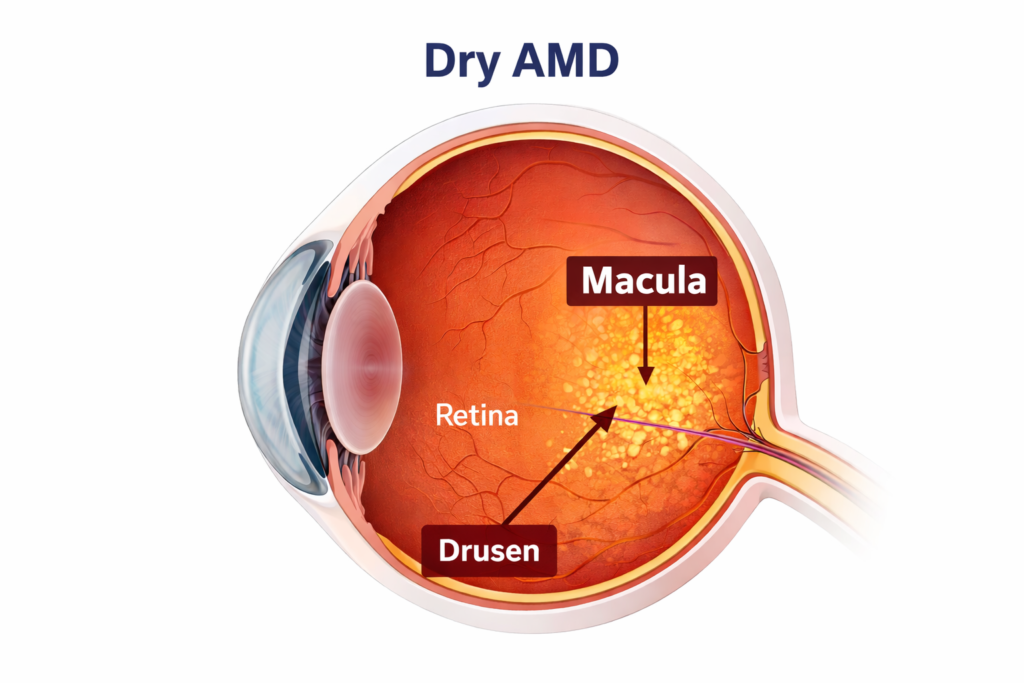
Dry AMD (Age-related Macular Degeneration): Drusen deposits forming in the macula region.
Dry AMD usually progresses slowly, but if it is not detected early, it may lead to blurred central vision and difficulty performing daily tasks such as reading or recognizing faces.
What Is Dry AMD and How Does It Develop?
Many people ask: what is Dry AMD and how serious is it?
Dry AMD develops when the cells in the macula weaken over time. In many cases, small yellow deposits called drusen build up under the retina. As drusen increases, the macula may become thinner and less effective, which can affect central vision.
This condition often develops gradually, meaning many people may not notice symptoms in the early stages.
Understanding what Dry AMD is can help with early detection and better eye care.
Dry AMD Symptoms
Dry AMD symptoms may vary from person to person, but the most common signs include:
- Blurred central vision
- Difficulty reading small text
- Straight lines appearing wavy or distorted
- Letters looking faded or missing
- A dark or empty spot in the center of vision
- Reduced contrast sensitivity
- Difficulty recognizing faces
- Colors appearing less bright
If you notice any of these symptoms, it is important to consult an eye doctor as soon as possible.
Who Is More Likely to Get Dry AMD?
Dry AMD is more common in individuals over 50, but certain risk factors can increase the chances of developing the disease, including:
- Age (50+ years old)
- Family history of AMD
- Smoking
- High blood pressure
- High cholesterol
- Long-term sun exposure without UV protection
- Poor diet and low antioxidant intake
People in high-risk groups should have regular eye exams for early detection.
Is There a Treatment for Dry AMD?
Currently, there is no complete cure for Dry AMD, but the main goal of treatment is to slow the progression and protect vision for as long as possible.
Common management strategies include:
- Regular eye check-ups
- Monitoring vision changes with the Amsler Grid test
- Healthy diet rich in antioxidants
- Quitting smoking
- Wearing UV-protective sunglasses
- Vitamin supplements recommended by an eye specialist
In some cases, AREDS2 supplements may help slow progression, especially in intermediate or advanced stages.
Does Dry AMD Get Worse Over Time?
Dry AMD usually progresses slowly. However, in some patients, vision loss may increase over time, especially if the disease advances into later stages.
Early diagnosis and regular monitoring are essential to reduce the risk of severe central vision loss.
Monitoring Dry AMD with the Amsler Grid Test
One of the easiest ways to monitor Dry AMD at home is the Amsler Grid test. This test helps detect changes in central vision.
If the grid lines appear bent, broken, or distorted, it may be a sign of macular damage, and you should contact an eye doctor.
You can take the Amsler Grid test online here:
👉 https://amsler-grid.com
Tips to Slow Down Dry AMD Progression
To protect your macula and reduce the progression of Dry AMD, the following habits may help:
- Avoid smoking
- Eat foods rich in Omega-3
- Consume leafy green vegetables regularly
- Exercise regularly
- Control blood pressure and cholesterol
- Protect eyes from UV light
- Get routine eye exams
These lifestyle changes can support eye health and help maintain better vision over time.
In summary, Dry AMD is a common type of age-related macular degeneration that affects the macula and gradually reduces central vision. While it often progresses slowly, early detection and proper follow-up can help prevent serious vision loss.
If you notice changes in your central vision, consult an eye doctor and monitor your eyesight regularly.
For more information about the macula, you can also read our article:
What Is the Macula (Yellow Spot)?