What is Wet AMD? Wet AMD (Wet Age-Related Macular Degeneration) is a serious eye disease that affects the macula (yellow spot), a small but critical part of the retina responsible for sharp central vision. Wet AMD can cause rapid vision changes and may lead to permanent central vision loss if not treated early.
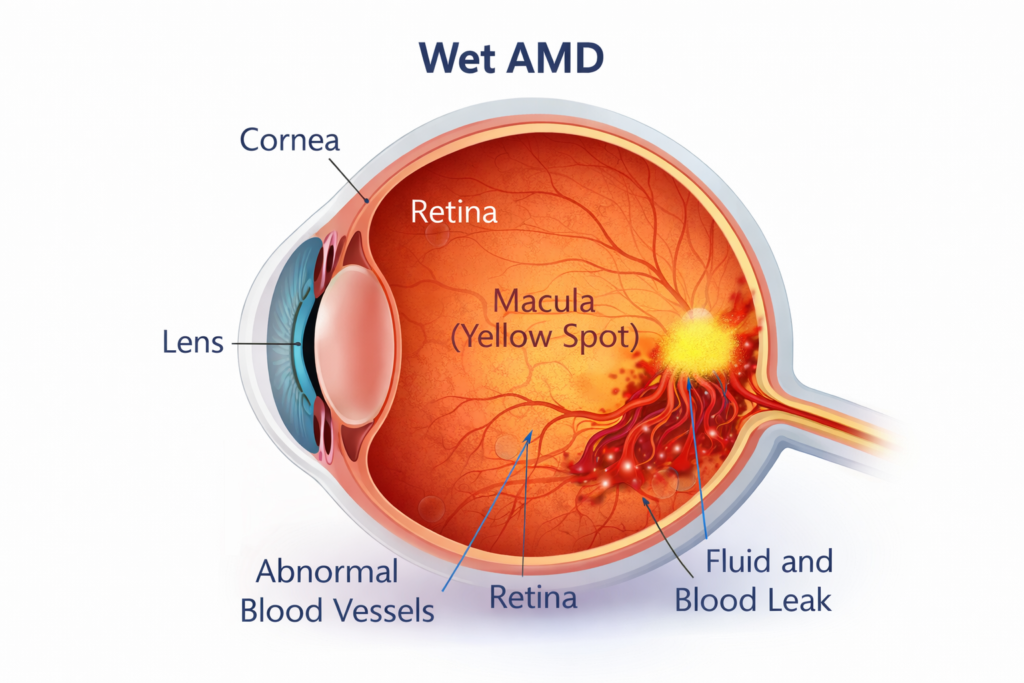
Wet AMD diagram showing abnormal blood vessels under the retina
Wet AMD usually develops in people over the age of 50 and is considered the more aggressive form of AMD. Unlike Dry AMD, Wet AMD can progress quickly, making early diagnosis extremely important.
How Does Wet AMD Develop?
To understand what is Wet AMD, it is important to know what happens inside the eye. Wet AMD occurs when abnormal blood vessels grow under the retina and the macula. These vessels are fragile and may leak fluid or blood.
As a result, the macula becomes damaged and central vision may become blurred, distorted, or partially blocked. Over time, this damage can significantly affect daily life activities such as reading, driving, and recognizing faces.
What Are the Symptoms of Wet AMD?
Wet AMD symptoms often appear suddenly or worsen quickly. The most common Wet AMD symptoms include:
- Seeing straight lines as wavy or distorted
- Blurred central vision
- A dark or empty spot in the center of vision
- Difficulty reading small text
- Letters appearing missing or shifted
- Colors appearing faded
- Difficulty recognizing faces
- Sudden vision changes in one eye
If you notice any of these symptoms, you should consult an eye doctor immediately. Early treatment can help slow down vision loss.
Wet AMD vs Dry AMD: What Is the Difference?
AMD is generally divided into two types: Dry AMD and Wet AMD.
Dry AMD
- More common
- Develops slowly
- Caused by gradual damage to the macula
- Vision loss happens over time
Wet AMD
- Less common but more severe
- Progresses faster
- Caused by abnormal blood vessel growth
- Fluid leakage and bleeding may occur
- Central vision loss can happen quickly
Because Wet AMD progresses rapidly, it requires urgent medical evaluation and regular follow-up.
Who Is at Risk of Wet AMD?
Certain factors increase the risk of developing Wet AMD. Common risk factors include:
- Being 50 years or older
- Family history of AMD
- Smoking
- High blood pressure
- High cholesterol
- Obesity
- Long-term exposure to UV light
- Poor nutrition and lack of antioxidants
People with these risk factors should have regular eye check-ups, even if they do not have symptoms.
How Is Wet AMD Diagnosed?
Wet AMD is diagnosed by an eye specialist using several advanced eye tests. Common diagnostic methods include:
- Dilated eye examination
- OCT (Optical Coherence Tomography)
- Fluorescein angiography
- Amsler Grid test
These tests help detect fluid buildup, abnormal blood vessels, and early signs of macular damage.
Amsler Grid Test for Wet AMD Detection
One of the simplest ways to monitor central vision changes is the Amsler Grid test. It can help detect early signs of macular degeneration, including Wet AMD.
If the lines on the grid appear bent, broken, blurry, or missing, this may indicate a macular problem.
You can take the Amsler test online here:
👉 https://amsler-grid.com
How Does Wet AMD Affect Vision?
Wet AMD mainly affects central vision, which is the vision you use to focus on objects directly in front of you. Many patients notice that their side vision remains normal, but their ability to see details becomes difficult.
For example, Wet AMD may cause problems such as:
- Difficulty reading or using a phone
- Trouble driving due to blurred vision
- Distortion when looking at faces
- Difficulty recognizing small objects
Because Wet AMD can worsen quickly, monitoring symptoms and receiving treatment early is essential.
Does Wet AMD Get Worse Over Time?
Yes, Wet AMD can progress and become worse over time if untreated. The abnormal blood vessels may continue leaking, causing more damage to the macula and increasing vision loss.
However, modern medical treatments can help slow the disease and reduce further damage. Regular follow-up appointments and early intervention are the best ways to protect vision.
What Should People with Wet AMD Do?
If you have Wet AMD or suspect you may have it, these recommendations can help manage the condition:
- Take the Amsler Grid test regularly
- Avoid smoking and passive smoke exposure
- Wear UV-protective sunglasses
- Eat foods rich in omega-3 and antioxidants
- Attend routine eye check-ups
- Report sudden vision changes immediately
Keeping track of symptoms and following your doctor’s treatment plan is critical.
Is There Treatment for Wet AMD?
Yes, Wet AMD is treatable. The most common treatment is anti-VEGF injections, which are delivered directly into the eye. These injections help reduce abnormal blood vessel growth and stop fluid leakage.
Some patients may also benefit from laser treatment or photodynamic therapy, depending on the severity and stage of the disease.
Treatment plans vary from person to person, so it is important to follow the recommendations of an eye specialist.
How to Reduce the Risk of Wet AMD
Although Wet AMD cannot always be prevented, you can reduce your risk by following healthy habits:
- Do not smoke
- Maintain healthy blood pressure
- Control cholesterol levels
- Eat leafy greens and antioxidant-rich foods
- Exercise regularly
- Protect your eyes from sunlight
- Get regular eye exams after age 50
These habits can support long-term macular health.
Conclusion: What Is Wet AMD and Why Is It Important?
In summary, the answer to what is Wet AMD is simple: Wet AMD is an advanced form of age-related macular degeneration caused by abnormal blood vessels under the retina. It can lead to rapid central vision loss if not diagnosed and treated early.
If you experience blurry vision, distorted lines, or dark spots in your vision, you should seek professional medical help immediately. Early detection is the best way to protect your eyesight.
To learn more about the most common form of macular degeneration, read our guide: What Is Dry AMD?