01
PA System
Approved
L-Acoustics
- K1, K2, Vdosc, Kara
- W SB28 subs
Approved
Meyer Sound
- MILO or MICA series
- W 1100 LCF subs
Approved
d&b Audiotechnik
- J or V series
- W J or V series subs
Approved
JBL Vertec
- VTX-V series
02
FOH Console
Approved
DiGiCo
- SD7, SD10, SD12
- Min. 48 inputs
Approved
SSL
- L500, L300 series
Approved
Yamaha
- CL5, CL3, PM7
Approved
Avid
- S6L 24D or larger
03
Monitor Console
Approved
DiGiCo SD10
- Min. 48 inputs
- Min. 16 aux busses
Approved
Yamaha CL5
- With Rio boxes
Approved
Avid S6L
- Stage 64 stagebox
04
Outboard / Processing
- TC Electronic M6000 or BSS Omnidrive for system processing
- Lake LM 44 or LM 26 acceptable alternatives
- Stereo compressor at FOH (dbx 160, UA 1176 or equivalent)
- All digital desks must be fully reset before soundcheck — no scenes or patches from previous acts
01
Drums
- Kit: Tama Starclassic Maple or Pearl Masters — 22" kick, 10/12/14/16" toms, 14" snare
- Cymbals: Zildjian A or K series — 14" hi-hat, 16" crash, 18" crash, 20" ride
- Hardware: 2× boom stand, 1× hi-hat, 1× snare stand, 1× kick pedal (DW 5000/9000), 1× drum throne
- All drum heads must be new for main show
- Drum riser: minimum 2.4m × 2.4m, 40cm height — see Stage tab
02
Bass
- Amp: Ampeg SVT-4 PRO or SVT-CL head
- Cabinet: Ampeg 8×10" or 4×10" + 1×15"
- Direct out required from amp (pre-EQ preferred)
03
Guitar
- Amp: Marshall JVM 410H or Mesa Boogie Mark V head
- Cabinet: Marshall 4×12" (V30 or G12T-75 speakers)
- Guitar amp placed in backline area, not in drum riser zone
04
Keys / Synth
- 2× keyboard stands (X-style, double-tier capable)
- 1× Nord Stage 3 or similar 88-key weighted — provided by artist
- 1× Roland Integra-7 / M3 — provided by artist
- 1× Microkorg — provided by artist
- All DI boxes and cables for keys: 4× Radial JDI (stereo pairs)
01
Input List
| Ch | Source | Microphone / DI | Stand | Elec. |
|---|
02
Aux / Monitor Sends
01
Risers
Drums
2.4 × 2.4 m
H: 40 cm
Keys
1.2 × 1.2 m
H: 20 cm
Guitar
0.9 × 0.9 m
H: 20 cm
02
Stage Requirements
- Minimum stage width: 12 metres
- Minimum stage depth: 9 metres
- Stage must be clear of all non-essential equipment 2 hours before doors open
- No audience members, guests or unauthorized personnel backstage at any time
- Side fills (1 per side) — min. 2×12" or equivalent
- Front fills across downstage edge — min. 4×12" full range
- Drum fill behind kit — min. 1×18" sub + 1×12" monitor
- IEM system: Sennheiser G4 300/500 series — 7 stereo channels minimum
- All IEM frequencies must be coordinated and cleared before soundcheck
- Stage left: 1× tall boom stand for trumpet monitor
- Cable management: all cables taped and routed safely, no trip hazards
03
Crew & Schedule
- Load-in: minimum 6 hours before doors
- Soundcheck: minimum 2.5 hours, starting 3 hours before doors
- Provided crew: 1× FOH engineer (travelling), 1× monitor engineer (travelling)
- Required local crew: 1× stage manager, 2× stage hands, 1× lighting operator
- Catering required for crew from load-in
01
Power
- All mains power must be clean and stable — UPS or power conditioning for audio racks
- Separate power circuits for audio and lighting — no shared circuits
- Stage power: min. 2× 32A single phase for backline + monitoring
- FOH: min. 1× 16A single phase, dedicated circuit
- Earth / ground loops are not acceptable — venue must ensure proper earthing
- Backup generator required for all outdoor events — must be tested before show
02
Truss & Rigging
- Lighting truss: structural calculations and rigging certificates must be provided
- All rigging must comply with local regulations and be inspected by certified rigger
- Minimum truss height: 6 metres from stage floor
- Separate truss for audio delays (if required) — not shared with lighting
- Rigging report must be submitted to production manager 72 hours before show
01
Stage Plot
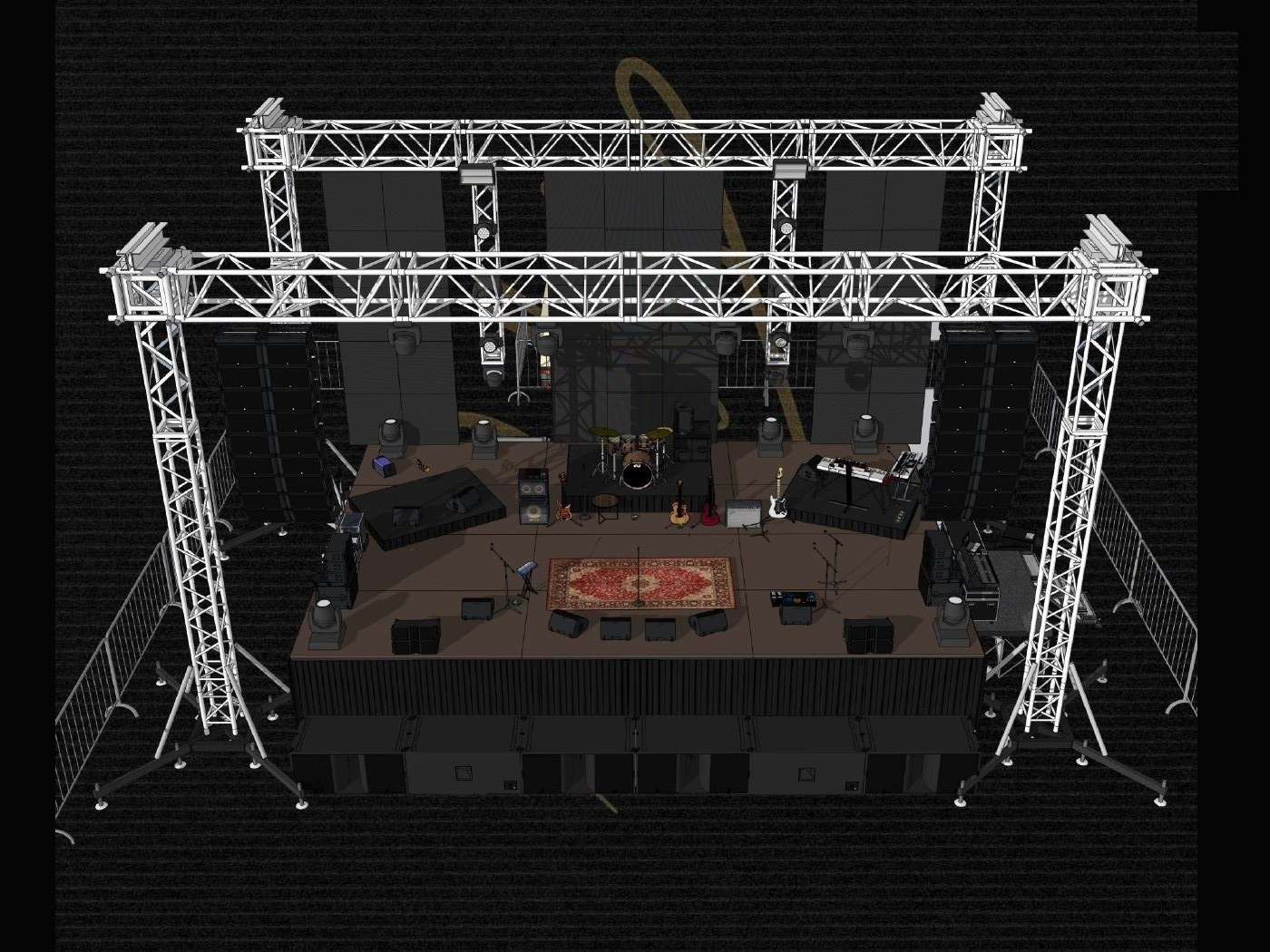
LED screen and lighting fixtures are shown for reference only. This stage plot indicates performer positioning and stage layout.
Important Notes
- If any item specified in this rider cannot be sourced or requires a substitute, the production manager must be contacted at least 2 weeks before the concert date for approval.
- For the hospitality rider, accommodation, transport, and meet-and-greet arrangements, please contact our production manager separately.
- The lighting rider is independent of this document and will be provided separately.
- From the moment the crew arrives, no unauthorised personnel, audience members, or guests are permitted backstage, in the wings, or in the dressing room area.
02
Agreement
This technical rider is an integral part of the concert contract. Every detail contained herein represents the minimum requirements for a successful Turgut Çıngı performance. By signing the concert agreement, the organiser confirms acceptance of all specifications listed in this document. Any deviation from this rider without prior written approval from the production manager or sound engineer will be considered a breach of contract, and the right to cancel the concert rests with the Turgut Çıngı team.